




Unsure about the sanitary quality of your plant material?
Sanitary issues are more relevant than ever. Viruses and phytoplasmas can have a lasting impact on the quality and productivity of your vineyard, which is why, in case of doubt, it is essential to carry out a sanitary diagnosis—a necessary step before making decisions. The vine is exposed to numerous pathogens, which can sometimes be difficult to identify with certainty, as some symptoms are common to multiple diseases. The only way to accurately assess the sanitary status of your plant material is through ELISA analyses (antibody-antigen detection) or PCR (amplification of DNA regions specific to the pathogen).
skills and methods
Our teams are proficient in two analysis techniques: PCR and ELISA (Enzyme-Linked Immunosorbent Assay). The PCR technique is very reliable and is also the only option for certain diseases. Currently, ELISA remains the only method recognized for official testing. Depending on your request, our teams select the most suitable analysis technique. We are also able to sanitize your virus-infected plant material.
PCR METHOD OVERVIEW
PCR is an in vitro molecular biology method for DNA amplification. Detection is achieved through exponential amplification of specific fragments of the pathogen’s genome (DNA or RNA for viruses) present in small amounts in the plant. This amplification is carried out using the enzyme Taq Polymerase and primers complementary to the target genome. Visualization is done under UV light after gel electrophoresis. These tests are conducted to detect phytoplasmas such as Bois noir and Flavescence dorée. They can be performed on plants with or without symptoms.
ELISA METHOD OVERVIEW
ELISA is an immuno-enzymatic method for pathogen detection based on the recognition by specific antibodies of viral envelope proteins. It allows for the diagnosis of leafroll viruses (GLRaV-1*, GLRaV-2, GLRaV-3*, GLRaV 1+3*, GLRaV-4 to -9 except GLRaV-8), rugose wood viruses (ArMV* and/or GFlV*), and fleck virus (GFkV). The laboratory has been accredited according to ISO 17025 by COFRAC (No. 1-1919, scope available at www.cofrac.fr) for ELISA analyses since October 2007. Only viruses marked with an asterisk (*) are within the scope of the accreditation.

Our laboratory is now recognized as the French expert in vine sanitary diagnostics. On average, we analyze more than 106,220 vine plants each year using ELISA, corresponding to approximately 250 hectares of vineyards. Every year, we conduct inter-laboratory tests on the ELISA method, allowing us to confirm the compliance of our work compared to our peers. Additionally, we hold a quarantine authorization to analyze plant material from high-risk areas.
Novatech Laboratory is Cofrac accredited.
Cofrac Accreditation No. 1-1919. Scope available at www.cofrac.fr
Conduct a sanitary diagnosis
Send us your sanitary diagnosis request by downloading the document below. You will also find the sampling instructions, which include all practical details, the procedure for taking your samples, and shipping your specimens.
the main viruses and phytoplasmas routinely analyzed
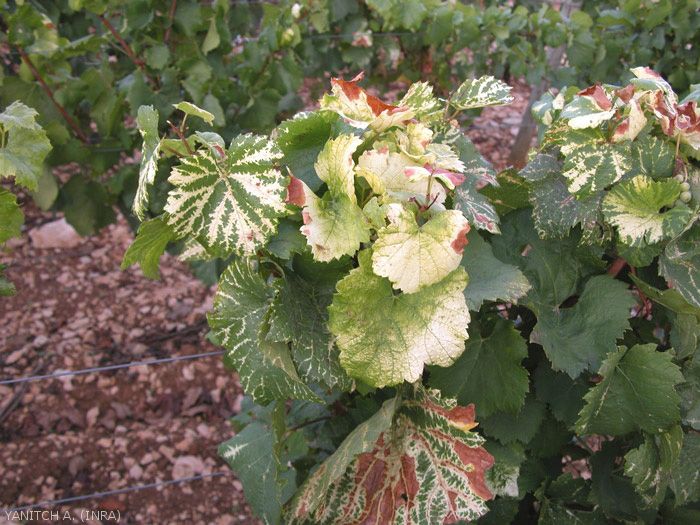
SHORT KNOTTED
It is a viral disease associated with two viruses in France: GFLV (Grapevine fan leaf virus) and ArMV (Arabis Mosaic Virus).
Vector: xiphinema index.
Symptoms: deformation and yellowing of leaves, shortened internodes, and forked or flattened shoots may be observed.
Consequences for your vineyard: slow and irreversible spread, reduced yield and quality, progressive degeneration potentially leading to plant death.
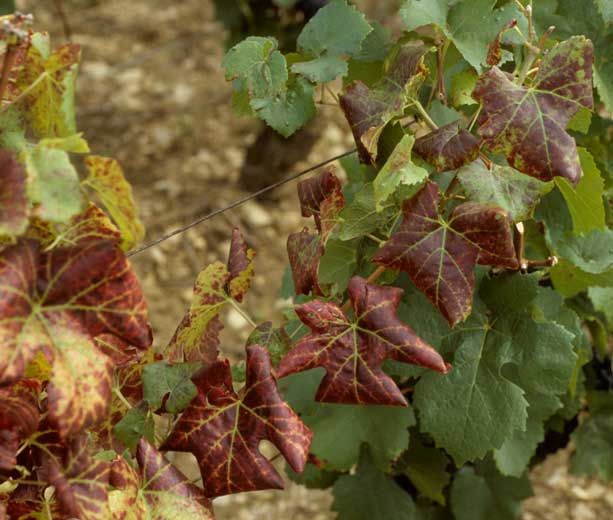
LEAFROLL
It is a viral disease associated with six viruses (Grapevine leafroll-associated virus – GLRaV), three of which are found in France: GLRaV-1, GLRaV-2, and GLRaV-3.
Vector: scale insects.
Symptoms: rolling of leaf edges toward the underside, leaf color changes (yellowing or reddening), and uneven ripening.
Consequences for your vineyard: risk of spread, weakened vines, reduced yield and quality.
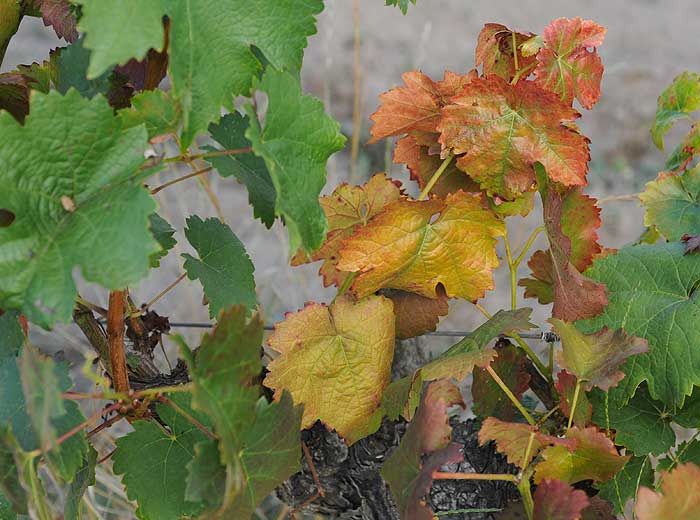
FLAVESCENCE DORÉE
It is a quarantine disease (European Directive 2000/29/EC) subject to mandatory reporting. It is caused by a wall-less bacterium (phytoplasma).
Vector: leafhopper Scaphoideus titanus
Symptoms: delayed bud break, leaf color changes (yellowing or reddening), drying of grape clusters, and difficulty in shoot growth.
Symptoms of Flavescence dorée and Bois noir are identical; only a sanitary diagnosis can distinguish them.
Consequences for your vineyard: significant reduction in yield and quality, weakening of the vines. It is particularly serious because it is highly contagious and there is no direct control method.
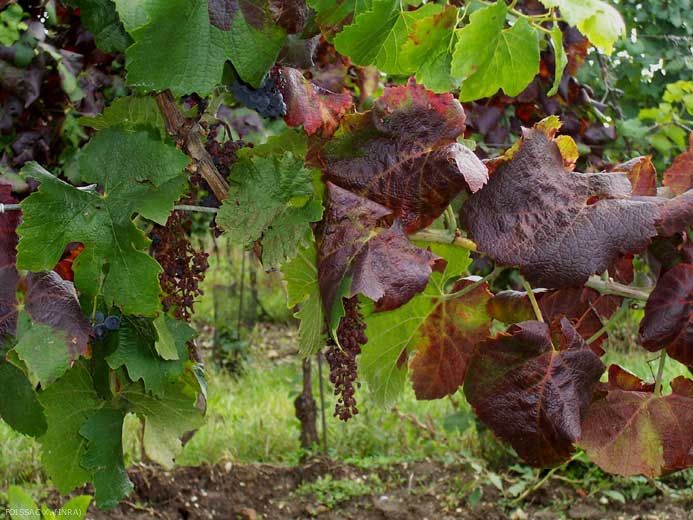
BLACK WOOD
It is a disease caused by a wall-less bacterium (phytoplasma).
Vector: leafhoppers of the family Cixiidae.
Symptoms: delayed bud break, leaf color changes (yellowing or reddening), drying of grape clusters, and difficulty in shoot growth.
Symptoms of Black wood and Golden Flavescence are identical; only a sanitary diagnosis can distinguish them.
Consequences for your vineyard: significant reduction in yield and quality, progressive degeneration potentially leading to plant death.
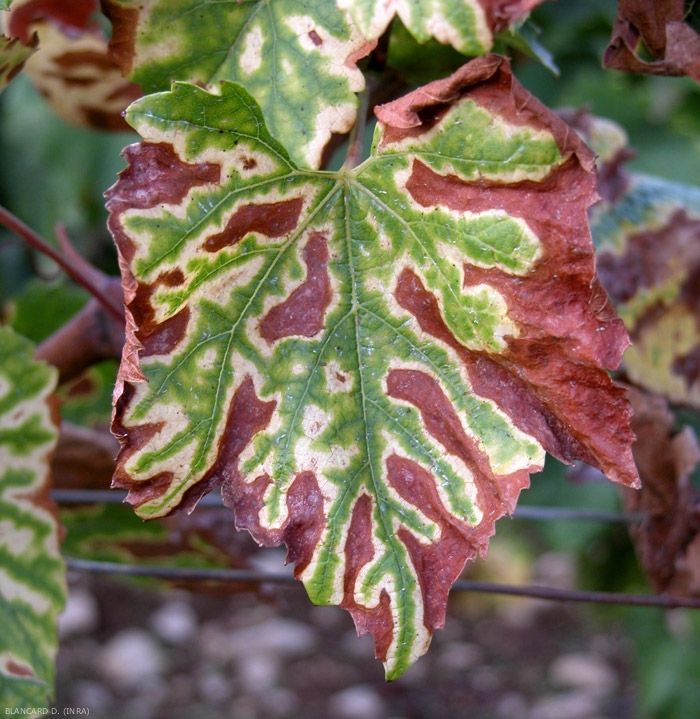
WOOD FUNGI
It is a group of diseases (eutypiosis, esca, botryosphaeria) caused by a complex of fungi. Molecular identification techniques using qPCR allow confirmation of the presence of pathogens associated with these diseases in the vine.
Symptoms: weakening of the vine, severe loss of vigor, and significant deterioration of the leaf system.
Consequences for your vineyard: degeneration that can lead to plant death. In some cases, mortality can be sudden. Mortality rates vary by year, but remain significant and extremely damaging to the vineyard.

The vine faces multiple diseases. If you wish to learn more, we invite you to visit the INRAE Ephytia website. They have done remarkable and comprehensive work on the various vine-related diseases. Beyond identification, you can learn about their causes, protection methods, and consequences for your vineyard.